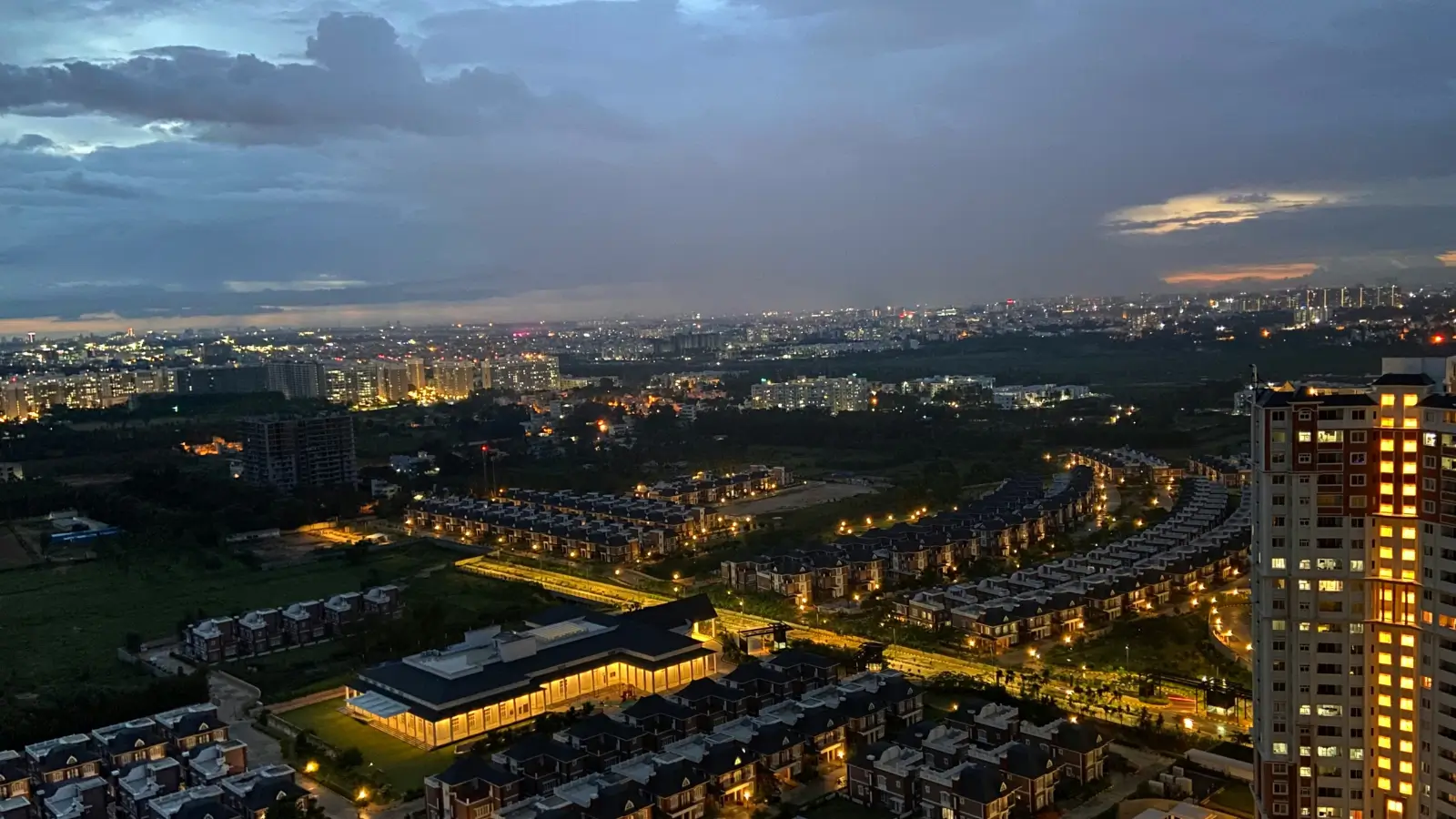
Is Thanisandra good for real estate investment? The case on price growth, metro, jobs, rental demand and risks, with Thanisandra investment potential explained.
Is Thanisandra good for real estate investment? On the numbers, the case is strong, but it comes with trade-offs worth knowing. Here is the argument in six parts, followed by the risks, using Codename Club Class as the reference project.
1. Price Growth
Rates on Thanisandra Main Road rose from ₹4,590 per sq ft in 2016 to ~₹11,500–11,750 in 2026. Values grew 90.1%–94.2% over five years and 10.0%–11.4% in the past year alone.
2. Value Entry
Thanisandra still prices well below its neighbours. Hebbal's luxury band runs at ₹18,000–24,000 per sq ft, and branded launches nearby sit at ~₹13,000–16,000. Club Class enters at about ₹11,700–15,100, close to the Thanisandra average, which leaves room for re-rating as the micro-market matures.
3. Infrastructure
The Blue Line airport corridor (Yelahanka station ~4.6 km away, targeted around June 2027), the Pink Line terminal at Nagawara (targeted December 2026), the Hennur–Bagalur Road and the Satellite Town Ring Road all converge on this belt.
4. Jobs
Bhartiya City (~2.6 km), Manyata Embassy Business Park (~6.8 km), Karle Town Centre, the Kodigehalli offices and the KIADB Aerospace Park all feed housing and rental demand.
5. Rental Demand
Rental yields for an A-class developer's project are benchmarked at 3.5%–4% a year semi-furnished and 4%–4.5% furnished, with long-stay corporate tenants as the core market.
6. Scarce Product
Lakefront land in an established corridor is finite. At Club Class, the ~30-acre Thirumenahalli Lake cannot be built on, so the view is protected, and homes with lasting views tend to hold a premium and resell more easily.
Thanisandra Investment Potential: The Risks
Any honest look at Thanisandra investment potential should cover the downside:
Traffic: Thanisandra Main Road sees heavy peak-hour congestion until the metro lines open.
Metro timelines: both lines have target dates that can move.
Pre-launch status: at Club Class, RERA registration is awaited and possession is targeted for 2029.
Uneven growth: rates rose 23.5% in 2024 but only 0.5% in 2025, so returns do not arrive evenly.
North Bangalore Investment 2026: How Thanisandra Fits
For North Bangalore investment 2026 decisions, Thanisandra sits in the middle ground: more established than the outer airport belt, and far cheaper than Hebbal. The indicative outlook is 8%–12% a year in a stable market. On a ₹2.66 Cr home, that would mean a value of roughly ₹3.35–3.74 Cr after about three years, though projections are illustrative and not guaranteed.
Who It Suits
Thanisandra suits investors with a horizon of three years or more, who want rental income from professional tenants and can ride out uneven yearly growth. It suits end-users who want a lake setting at a corridor-average price.
Questions to Ask Before Investing
What is the all-in cost per sq ft, including GST and stamp duty?
What rent can the unit realistically earn, and from which tenants?
How long can you hold if growth stalls for a year or two?
Is the RERA registration in place, and does the possession date suit your plans?
The Verdict
Is Thanisandra good for real estate investment? For a patient buyer who checks approvals and pays close to the corridor average, yes. Read the year-by-year price trend, and see unit prices on our price page. This is general information, not investment advice.
Related reading: Thanisandra property price trends and pre-launch vs ready-to-move flats.
FAQs
How much have Thanisandra property prices grown?
About 90.1%–94.2% over five years, and 10.0%–11.4% over the past year.What is the outlook for appreciation?
An indicative 8%–12% a year in a stable market, with potential uplift around metro commissioning.What are the main risks?
Peak-hour traffic until the metro opens, metro timelines that can shift, and uneven year-to-year growth.What rental yield can investors expect?
3.5%–4% a year semi-furnished and 4%–4.5% furnished, at the A-class developer benchmark.
Related Articles
Is Codename Club Class Worth ₹2.15 Crore? An Honest Pre-Launch Review
An honest Codename Club Class review: lake frontage, corner-only homes, pricing at ₹11,700–15,100 per sq ft, and the open questions to check before you book.

Codename Club Class Launch Date and How the EOI Process Works
When is the Codename Club Class launch date? See how the EOI works, how it converts to a booking after RERA registration, and how priority allotment is decided.
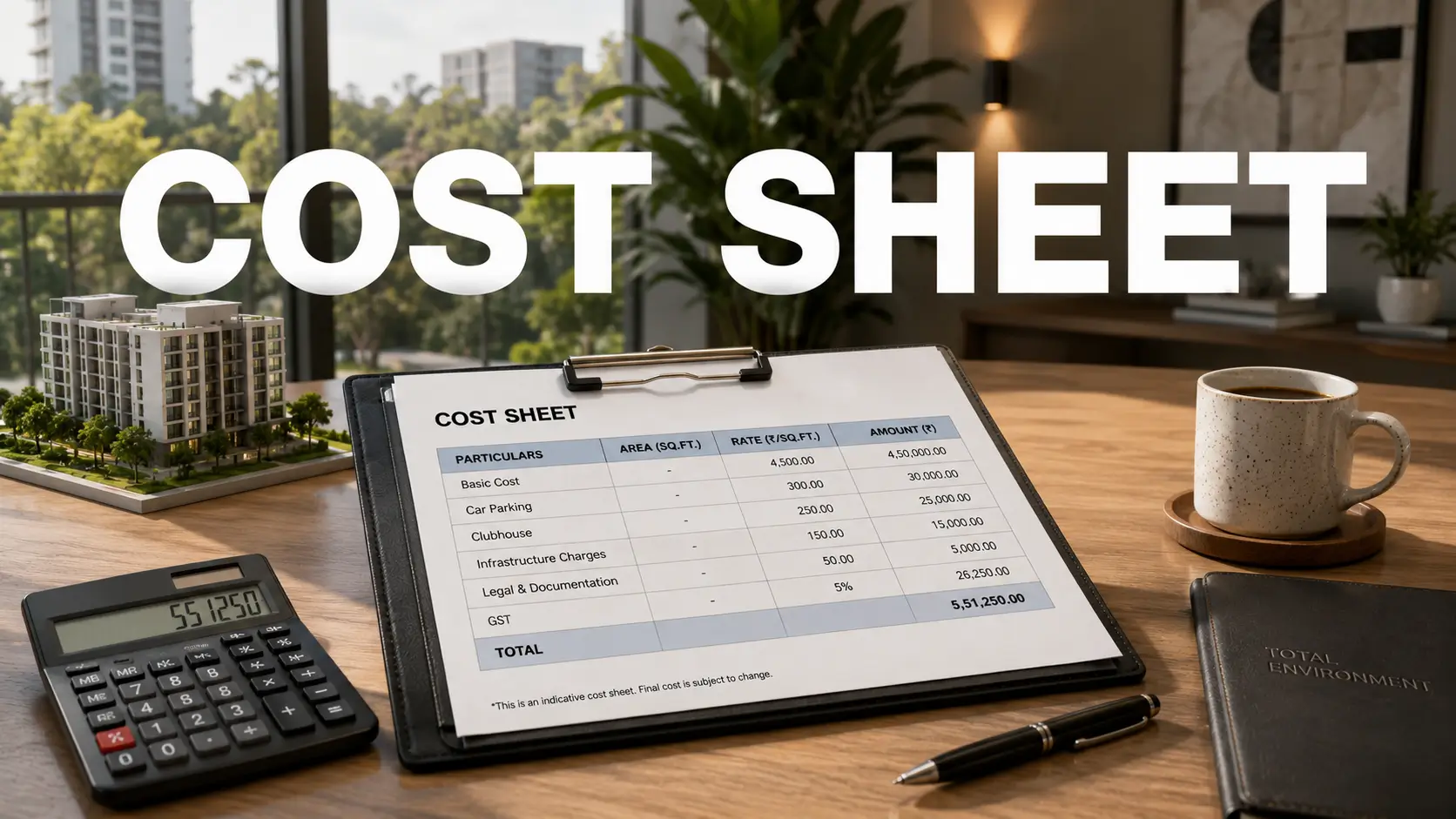
Codename Club Class Cost Sheet Explained: Every Charge Beyond Base Price
Codename Club Class cost sheet breakdown: base price, floor rise, PLC, parking, club charges, maintenance, 5% GST and stamp duty explained before you book.

Codename Club Class RERA Status: What to Check Before You Pay an EOI
Codename Club Class RERA registration status explained: what is awaited, how to verify the RERA number on the Karnataka portal, and what to check before an EOI.